
Treatment for Heel Pain from Plantar Fasciitis
Treatment for Heel Pain from Plantar Fasciitis
Plantar fasciitis is one of the most common causes of heel pain, affecting people of all activity levels—from athletes and runners to individuals who spend long hours on their feet. The good news is that most cases of plantar fasciitis can be successfully treated without surgery using conservative, personalized care.
At our practice, we focus on identifying the root cause of heel pain and creating targeted treatment plans that reduce inflammation, improve foot function, and provide long-term relief.
What Is Plantar Fasciitis?
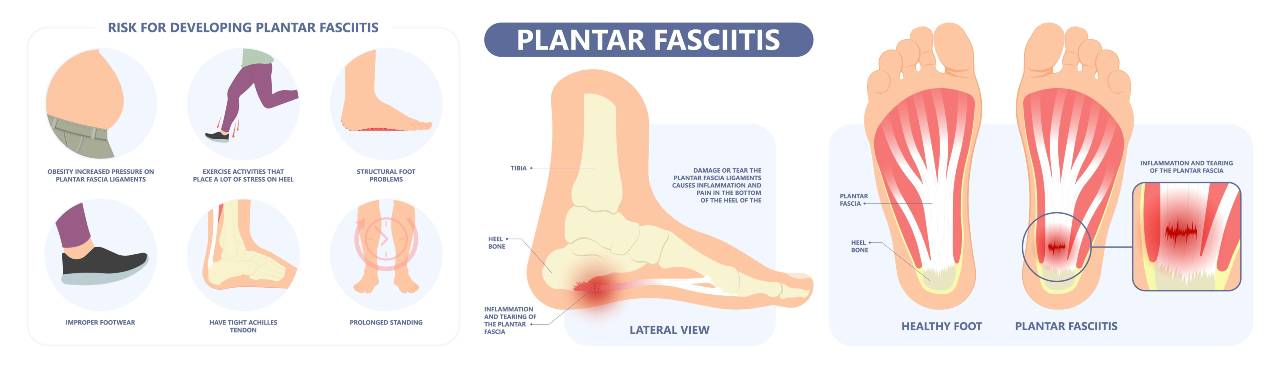
Plantar fasciitis is an inflammation or irritation of the plantar fascia, a thick band of tissue that runs along the bottom of the foot and supports the arch.
This tissue acts like a shock-absorbing structure with every step. When it becomes overstressed or overused, small tears and inflammation can develop, leading to heel pain.
A common symptom is sharp pain in the heel, especially with the first steps in the morning or after long periods of rest.
What Causes Plantar Fasciitis?
Plantar fasciitis usually develops from a combination of stress and mechanical factors rather than a single cause. Common contributors include:
- High-impact activities such as running or jumping
- Long periods of standing or walking on hard surfaces
- Wearing unsupportive or improper footwear
- Tight calf muscles or limited ankle flexibility
- Flat feet or high arches that affect weight distribution
- Sudden increases in activity or training intensity
- Weight changes, including pregnancy
These factors place repeated strain on the plantar fascia, increasing the risk of irritation and micro-tears over time.
How Plantar Fasciitis Is Diagnosed
Diagnosis begins with a detailed evaluation of your symptoms, medical history, and activity level. A physical examination is typically used to assess areas of tenderness and foot mechanics.
In some cases, imaging such as X-rays or ultrasound may be recommended to rule out other causes of heel pain, such as fractures or nerve-related conditions.
Treatment for Plantar Fasciitis Heel Pain
Most patients improve with non-surgical treatment. A personalized plan may include:
- Supportive footwear recommendations to reduce strain on the heel
- Activity modifications to prevent overuse and allow healing
- Custom orthotics to improve alignment and redistribute pressure
- Stretching and strengthening exercises for the calf and plantar fascia
- Anti-inflammatory treatments to reduce pain and swelling
- Night splints to gently stretch the foot while sleeping
- Cortisone injections in select cases for short-term pain relief
The goal of treatment is not only to reduce pain but also to correct the underlying mechanics that contribute to recurring symptoms.

When Surgery Is Considered
Surgery for plantar fasciitis is rarely needed. It may only be considered in severe cases where symptoms persist despite extended conservative treatment. When necessary, surgical procedures focus on releasing tension in the plantar fascia to reduce chronic pain.
Take the First Step Toward Relief
Heel pain should not be ignored or pushed through, as it can worsen over time and become more difficult to treat. Early intervention leads to faster recovery and better long-term outcomes.
If you are experiencing persistent heel pain, our team can help identify the cause and guide you through effective treatment options designed to restore comfort and mobility.
Call (612) 788-8778 or schedule an appointment online today to begin your recovery from plantar fasciitis.